
Lighting and Furniture: 7 Powerful Ways to Transform Modern Interiors with LIMA Group
Meta Description: Lighting and furniture can transform any interior. Discover 7 powerful ways to combine modern lighting, furniture, materials, and design with LIMA Group for residential and commercial projects.
Modern interiors are no longer designed around individual products. Instead, successful spaces bring together lighting and furniture to create environments that are functional, comfortable, visually attractive, and suited to the people who use them.
Whether you’re furnishing a home in Casablanca, developing a hotel in Morocco, fitting out an office in Liberia, designing a restaurant, or working on a commercial property anywhere in Africa, the relationship between lighting, furniture, architecture, and functionality matters.
At LIMA Group, we understand that every project has different requirements. Through LIMA Lighting and LIMA Furniture, our goal is to connect customers and project developers with carefully selected products and sourcing solutions from China and international manufacturing markets.
Our approach is built around one vision:
ONE VISION · MULTIPLE INDUSTRIES
From decorative chandeliers and pendant lights to sofas, dining tables, chairs, bedroom furniture, office furniture, and complete interior solutions, the right combination of products can completely change the way a space looks and feels.
This guide explores seven powerful ways to transform modern interiors and explains how homeowners, designers, contractors, developers, hotels, restaurants, offices, and retailers can approach lighting and furniture selection.
Why Lighting and Furniture Matter Together
Furniture provides structure to a room.
Lighting brings that structure to life.
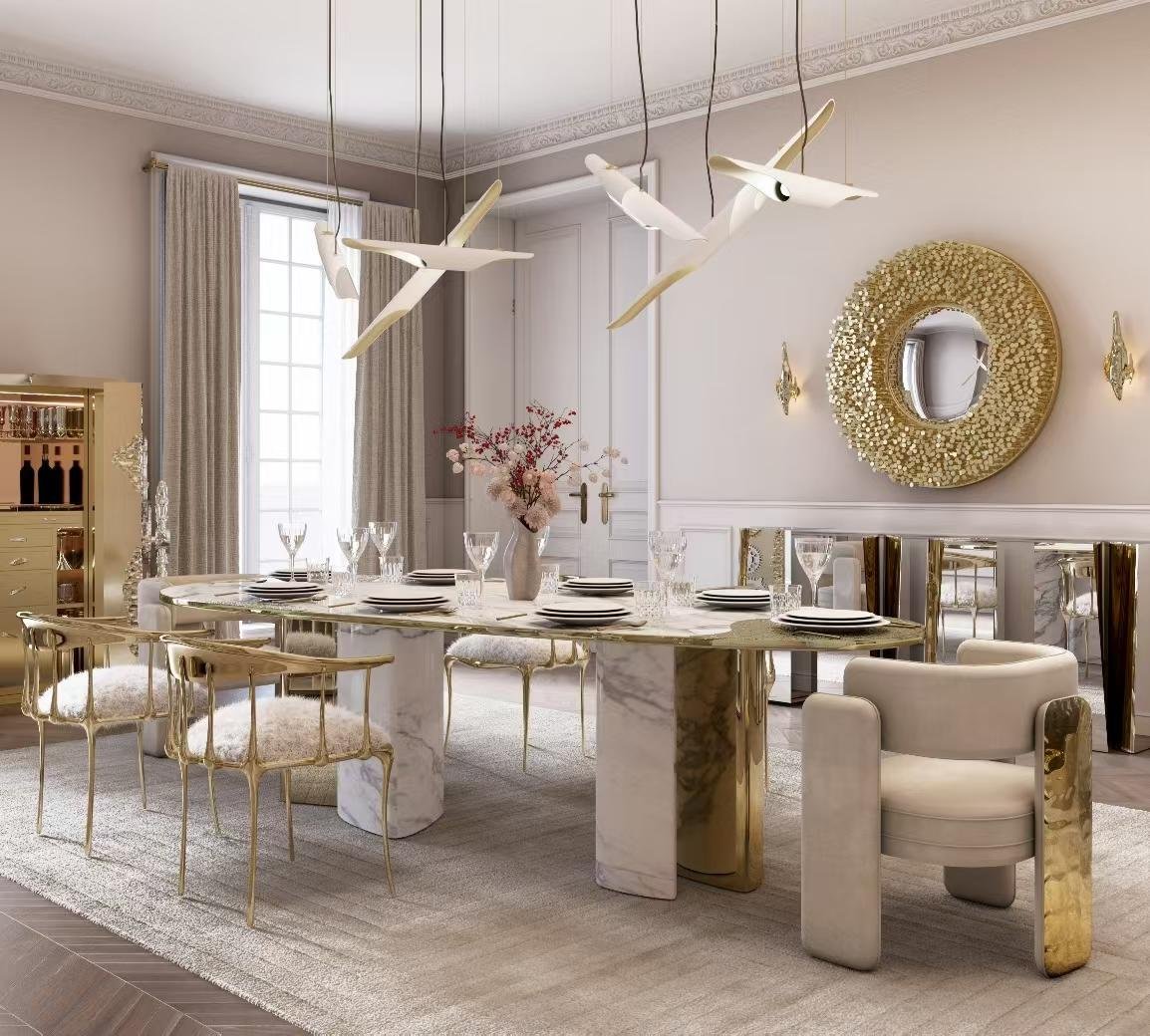
A beautiful sofa may look completely different under warm decorative lighting compared with bright cool-white illumination. A dining table can become a centerpiece when paired with a carefully selected chandelier. Similarly, an elegant hotel lobby can feel ordinary without the right combination of furniture, decorative lighting, and architectural illumination.
This is why lighting and furniture should be considered together rather than as completely separate purchases.
Creating Visual Balance
One of the most important principles in interior design is proportion.
Large furniture generally needs lighting with enough visual presence to balance it. Smaller furniture often works better with fixtures that are appropriately scaled.
For example:
| Interior Element | Suitable Lighting Approach |
|---|---|
| Large dining table | Chandelier or large pendant |
| Long conference table | Linear pendant lighting |
| Large living-room sofa | Floor lamps, wall lights, or layered lighting |
| Bed with tall headboard | Bedside pendants or wall sconces |
| Reception desk | Decorative pendant or architectural lighting |
| Retail display | Track, spotlight, or accent lighting |
| Outdoor seating | Exterior wall or landscape lighting |
The objective isn’t to make every product identical.
Instead, the objective is to make every element feel connected.
Building a Consistent Interior Style
A successful interior normally has a clear design language.
For a contemporary project, that could mean clean lines, neutral colors, metal finishes, glass, and minimalist furniture.
For a luxury interior, designers may introduce marble, premium upholstery, brass finishes, sculptural chandeliers, and statement furniture.
For a natural or organic interior, wood, stone, linen, rattan, warm lighting, and curved furniture may work together.
The important thing is consistency.
At LIMA Group, we believe that product selection should begin with understanding the project rather than simply selecting products from a catalog.
7 Powerful Ways to Transform Your Interior
1. Define the Room’s Focal Point
Every well-designed room benefits from a visual focal point.
In a living room, this could be the sofa arrangement, television wall, fireplace, artwork, or a statement chandelier.
In a dining room, the dining table and lighting fixture can become the central feature.
In a hotel lobby, the reception counter, decorative chandelier, architectural ceiling, or seating area may establish the main focal point.
Lighting is particularly effective because it can direct attention.
A statement chandelier above a dining table immediately establishes the center of the room. Wall lights can highlight artwork. Spotlights can emphasize displays. Floor lamps can create a comfortable reading area.
Before selecting products, ask:
What should people notice first when they enter this space?
Once the answer is clear, furniture and lighting decisions become much easier.
2. Layer Different Types of Lighting
One ceiling light rarely does everything a modern room needs.
Professional interior projects often use several lighting layers.
Ambient Lighting
Ambient lighting provides general illumination throughout a room.
Examples include:
- Ceiling lights
- Chandeliers
- Large pendant lights
- Recessed lighting
- Linear lighting
Task Lighting
Task lighting provides focused illumination for specific activities.
Examples include:
- Desk lamps
- Reading lamps
- Kitchen lighting
- Dressing-area lighting
- Workstation lighting
Accent Lighting
Accent lighting is used to highlight specific objects or areas.
Examples include:
- Artwork
- Display cabinets
- Architectural walls
- Product displays
- Decorative furniture
- Plants and landscape features
Combining these three layers creates flexibility.
A restaurant, for example, might use general ceiling illumination during cleaning and preparation, focused lighting over tables during service, and decorative accent lighting to create atmosphere in the evening.
3. Match Furniture Scale With Lighting
Scale is one of the easiest design details to overlook.
Imagine a twelve-seat dining table underneath a very small pendant. The pendant might look attractive by itself, but it could appear lost within the room.
The opposite problem can also occur. An oversized chandelier can dominate a small dining area.
Furniture and lighting should therefore be considered as a visual pair.
For example:
- Large dining tables can support substantial chandeliers.
- Long tables can work with linear pendant systems.
- Large sectional sofas can be complemented by floor lamps.
- Tall beds can work well with vertical wall lighting.
- Reception counters can use decorative pendant clusters.
- Large commercial spaces may require several lighting layers.
For large projects, mock-ups and samples can be particularly useful before final production.
4. Use Materials to Create Character
Materials influence the emotional character of an interior.
Wood can create warmth.
Metal can introduce a modern or industrial feeling.
Glass can create elegance and visual lightness.
Fabric can soften a room.
Stone can provide a sense of permanence and luxury.
Furniture and lighting provide excellent opportunities to repeat these materials throughout a project.
For example, a contemporary restaurant could combine:
- Natural wood dining tables
- Upholstered dining chairs
- Brass pendant lights
- Stone countertops
- Warm wall lighting
The products don’t have to be identical.
They simply need to communicate with one another.
5. Combine Function With Design
A beautiful interior still needs to work.
Furniture needs to be comfortable.
Lighting needs to provide appropriate illumination.
Storage needs to be practical.
People need enough space to move around.
This is particularly important in commercial environments.
A hotel chair may be attractive, but if it’s uncomfortable, guests will notice. A restaurant pendant may look beautiful, but excessive glare can negatively affect the dining experience. An office desk may look modern, but poor ergonomics can make it uncomfortable for employees.
At LIMA Group, product selection should therefore consider both aesthetics and practical requirements.
For project buyers, important questions include:
- Where will the product be installed?
- How frequently will it be used?
- Who will use it?
- What environmental conditions will it experience?
- How easy is it to maintain?
- What replacement components are available?
- What are the expected delivery requirements?
The best interior solutions combine appearance, performance, and practicality.
6. Use Color Strategically
Color is another important connection between furniture and lighting.
A neutral interior can provide a flexible background for statement lighting.
For example, beige sofas and natural wood furniture can be paired with a dramatic black or brass chandelier.
Similarly, dark furniture can be balanced with lighter walls and carefully positioned lighting.
Popular combinations include:
| Furniture Direction | Complementary Lighting Direction |
|---|---|
| Natural wood | Warm metal or glass |
| Beige upholstery | Brass or warm decorative fixtures |
| Dark furniture | Glass, white, or metallic lighting |
| Minimalist white furniture | Sculptural statement lighting |
| Green or earthy furniture | Natural materials and warm lighting |
| Luxury furniture | Crystal, brass, glass, or premium metal fixtures |
Color temperature also matters.
Warm lighting can create a comfortable and welcoming atmosphere, while cooler lighting can provide a cleaner and more energetic appearance.
7. Create Flexible Spaces
Modern spaces often need to perform multiple functions.
A home office may become a guest room.
A dining room may become a workspace.
A hotel lobby may function as a reception area, lounge, waiting area, and informal meeting space.
Flexible furniture and lighting make these transformations easier.
A large open-plan room, for example, can be divided visually using:
- Pendant lighting over the dining area
- Floor lamps around seating
- Accent lighting near artwork
- Task lighting at a workstation
- Decorative lighting for evening use
Rather than treating the entire room as one space, lighting can establish different functional zones.
Lighting and Furniture for Different Rooms
Different rooms have different requirements.
Living Rooms
Living rooms should balance comfort, style, and flexibility.
A typical modern living room may include:
- Sofa
- Coffee table
- Side tables
- TV console
- Storage furniture
- Floor lamp
- Table lamp
- Pendant or ceiling light
- Decorative wall lighting
Layered lighting allows the room to change throughout the day.
Bright general illumination may be appropriate when the room is being used actively, while softer floor and table lamps can create a more relaxed atmosphere in the evening.
Bedrooms
Bedrooms should generally feel comfortable and relaxing.
Instead of relying exclusively on a central ceiling fixture, consider multiple lighting points.
Bedside wall lights or pendant lights can provide focused illumination without occupying valuable table space.
Furniture should also prioritize:
- Comfort
- Storage
- Circulation
- Durability
- Visual simplicity
A well-designed bedroom might combine a statement bed, bedside tables, wardrobe, soft upholstery, warm lighting, and carefully selected decorative elements.
Dining Areas
Dining areas are one of the clearest examples of how lighting and furniture work together.
The dining table establishes the center of the room.
The chandelier or pendant fixture reinforces that center.
For long tables, linear fixtures or multiple pendants can distribute illumination more effectively.
For round tables, a central pendant or chandelier can create a strong visual relationship.
The furniture finish should also work with the lighting finish.
For example, a wooden table with upholstered chairs and warm metallic lighting can create a sophisticated contemporary dining environment.
Offices and Commercial Spaces
Commercial environments require a stronger focus on performance and durability.
Offices may require:
- Desks
- Ergonomic chairs
- Meeting tables
- Storage systems
- Reception furniture
- Task lighting
- General lighting
- Decorative lighting
Hotels, restaurants, retail stores, and property developments may have additional requirements related to branding and customer experience.
This is where professional product sourcing becomes particularly valuable.
LIMA Lighting: Modern Lighting Solutions for Projects
LIMA Lighting is part of LIMA Group’s multi-industry approach, focusing on lighting products for residential, hospitality, commercial, retail, architectural, and development projects.
The lighting range can include categories such as:
- Chandeliers
- Pendant lights
- Ceiling lights
- Wall lights
- Floor lamps
- Table lamps
- Spotlights
- Track lighting
- Outdoor lighting
- Decorative lighting
- Architectural lighting
- Commercial lighting
The objective isn’t simply to sell individual fixtures.
It’s to help customers identify lighting products that fit the style, technical requirements, budget, and application of their project.
For developers and contractors, this can be particularly useful when multiple lighting categories are required for one project.
LIMA Furniture: Furniture for Modern Living and Commercial Spaces
LIMA Furniture complements the lighting division by providing furniture solutions for residential and commercial environments.
Depending on project requirements, furniture categories may include:
- Sofas
- Armchairs
- Dining tables
- Dining chairs
- Coffee tables
- Side tables
- Beds
- Bedroom furniture
- Cabinets
- TV units
- Office desks
- Office chairs
- Conference tables
- Reception furniture
- Hospitality furniture
Furniture can also be selected according to a project’s desired aesthetic.
For example, a luxury hotel may require premium finishes and custom dimensions, while a residential development may prioritize cost efficiency, durability, and repeatable designs.
How LIMA Group Supports Project Sourcing
One of the major challenges in international procurement is managing multiple suppliers.
A project may require lighting from one manufacturer, furniture from another, packaging from another supplier, and shipping through a separate logistics provider.
LIMA Group’s broader model is designed around connecting customers with products and manufacturing capabilities in China while supporting international markets.
This can help simplify the sourcing process for customers who don’t want to manage every supplier individually.
Working With Chinese Manufacturers
China has a large and diverse manufacturing ecosystem covering both lighting and furniture.
Customers can access a wide range of:
- Decorative lighting
- Commercial lighting
- Outdoor lighting
- Chandeliers
- Pendant lights
- Wall lights
- Sofas
- Tables
- Chairs
- Bedroom furniture
- Office furniture
- Hospitality furniture
- Custom products
However, supplier selection remains important.
Before placing a large order, buyers should consider:
- Manufacturer experience
- Product quality
- Factory capability
- Product specifications
- Production capacity
- Packaging
- Lead times
- Quality control
- Export experience
- Certifications where required
- After-sales support
Customization and Private Label
Many manufacturers can customize products according to project requirements.
Customization may include:
- Dimensions
- Colors
- Materials
- Finishes
- Upholstery
- Lighting specifications
- Packaging
- Logos
- Product configurations
Private-label production can also allow distributors and retailers to sell products under their own brand.
For growing businesses, this can help establish a consistent identity across a product range.
Why Source Lighting and Furniture From One Project Partner?
Sourcing multiple categories through a coordinated supplier can simplify communication.
Instead of communicating with many different factories, a buyer can have one project brief covering multiple product categories.
This may be particularly useful for:
- Hotels
- Restaurants
- Residential developments
- Office buildings
- Retail stores
- Real-estate developers
- Interior designers
- Contractors
- Property owners
- Furniture retailers
- Lighting distributors
For a complete project, the sourcing process may include:
Project Brief → Product Selection → Quotations → Samples → Approval → Production → Quality Control → Shipping → Delivery
This approach can make procurement more organized and easier to manage.
Lighting and Furniture for the African Market
Africa’s construction, hospitality, residential, retail, and commercial sectors create opportunities for modern interior products.
Markets such as Morocco and Liberia have different customer needs, price points, architectural styles, and purchasing conditions.
For this reason, product selection should be adapted to the local market.
In Morocco, for example, customers may be interested in contemporary residential interiors, hospitality projects, luxury apartments, restaurants, offices, and property developments.
In Liberia and other West African markets, buyers may have strong demand for residential furniture, commercial interiors, hospitality projects, offices, and durable lighting solutions.
LIMA Group’s China-to-Africa sourcing model is designed around connecting manufacturing capabilities with customers in international markets.
How to Choose Quality Lighting and Furniture
Price shouldn’t be the only consideration when purchasing interior products.
The total value of a product also depends on quality, durability, maintenance, appearance, functionality, and expected lifespan.
Materials and Construction
For furniture, examine:
- Frame construction
- Upholstery
- Wood quality
- Metal components
- Hardware
- Surface finishes
- Joinery
- Weight capacity
For lighting, consider:
- Fixture materials
- Electrical components
- LED quality
- Driver quality
- Heat management
- Surface finish
- Installation requirements
- Maintenance access
Product specifications and samples can help buyers make better purchasing decisions.
Durability and Maintenance
A product used in a hotel or restaurant may experience significantly more daily use than one installed in a private residence.
Therefore, commercial projects may require more durable materials and construction.
Before purchasing, determine how the product will be used and what maintenance will be required.
Energy Efficiency
Energy efficiency is increasingly important for residential and commercial lighting projects.
LED technology provides designers with many options for decorative, architectural, and functional lighting.
For businesses, energy-efficient lighting may also help reduce operating expenses over time.
Buyers should consider not only the initial product price but also:
- Energy consumption
- Expected lifespan
- Maintenance
- Replacement costs
- Installation requirements
Modern Lighting and Furniture Trends
Interior design continues to change, but several trends are particularly relevant to modern projects.
Minimalist Design
Minimalism continues to influence furniture and lighting.
Clean lines, neutral colors, simple silhouettes, and uncluttered spaces can create a sophisticated environment.
Modern pendant lights, linear fixtures, sculptural floor lamps, and simple furniture designs can support this approach.
Natural Materials
Natural materials continue to be popular.
Wood, stone, linen, rattan, natural fabrics, and textured finishes can make modern spaces feel warmer.
Furniture and lighting can repeat these materials throughout an interior.
Curved Furniture
Curved sofas, rounded tables, curved chairs, and organic lighting fixtures can soften spaces dominated by straight architectural lines.
This approach can be particularly effective in hospitality and residential environments.
Smart Lighting
Technology is also changing modern lighting.
Smart systems can allow users to control:
- Brightness
- Scheduling
- Lighting scenes
- Color temperature
- Individual zones
For homes, this can improve convenience.
For hotels and commercial buildings, lighting controls can support different activities and operating schedules.
How to Plan a Lighting and Furniture Project With LIMA Group
A successful project begins with a clear brief.
Before requesting a quotation, customers should ideally provide:
- Project location
- Property type
- Room or building dimensions
- Product categories required
- Approximate quantities
- Preferred design style
- Target budget
- Preferred materials
- Delivery destination
- Required delivery timeline
Photos, floor plans, architectural drawings, inspiration images, or existing product references can also help.
Once the requirements are clear, product options can be reviewed and refined.
For larger projects, samples can be considered before full production.
Frequently Asked Questions
1. What does LIMA Group offer?
LIMA Group operates across multiple industries, including lighting, furniture, and energy solutions. Through its divisions, including LIMA Lighting and LIMA Furniture, the group focuses on connecting customers with products and sourcing solutions for residential and commercial projects.
2. Does LIMA Lighting supply different types of lighting?
Yes. LIMA Lighting can support multiple categories, including chandeliers, pendant lights, wall lights, floor lamps, table lamps, ceiling lights, spotlights, outdoor lighting, and other decorative and commercial lighting solutions.
3. What furniture does LIMA Furniture offer?
LIMA Furniture can source a broad range of furniture, including sofas, chairs, tables, beds, cabinets, office furniture, reception furniture, hospitality furniture, and other residential and commercial products.
4. Can LIMA Group source products from China?
Yes. LIMA Group’s business model is connected to China’s manufacturing and sourcing ecosystem, allowing customers to explore products for international projects.
5. Can lighting and furniture be customized?
Customization may be available depending on the manufacturer, product, quantity, and project requirements. Options can include dimensions, materials, finishes, colors, upholstery, packaging, and branding.
6. Does LIMA Group work with businesses and project developers?
Yes. Lighting and furniture sourcing can be suitable for contractors, developers, interior designers, hotels, restaurants, retailers, offices, property owners, distributors, and other commercial customers.
7. Can LIMA Group help with large projects?
Yes. Larger projects can be handled through a structured process involving product selection, quotations, samples where appropriate, production coordination, quality control, and international logistics.
8. Why combine lighting and furniture in one project?
Combining both categories can make it easier to create a consistent interior design. It can also simplify communication and procurement when multiple product categories are needed for one project.
9. What information should I provide when requesting a quotation?
Ideally, provide your project location, product categories, quantities, dimensions, preferred designs, materials, budget range, and delivery destination. Photos or drawings are also useful.
10. Can I request a quotation from LIMA Group?
Yes. Customers can submit a project brief describing what they need. The more information provided, the easier it is to identify suitable products and prepare a quotation.
Conclusion
The best interiors are created when every element works together.
Furniture establishes comfort, structure, and function. Lighting creates atmosphere, highlights architectural details, and influences how furniture, colors, and materials are perceived.
When these elements are planned together, the result can be more cohesive, practical, and visually impressive.
At LIMA Group, our approach is built around connecting customers with solutions across multiple industries.
Through LIMA Lighting and LIMA Furniture, we support customers looking for modern lighting and furniture for homes, offices, hotels, restaurants, retail spaces, developments, and other projects.
From a single residential project to a large commercial development, the process starts with understanding the customer’s requirements.
Choose the right products.
Coordinate the design.
Consider quality and functionality.
Plan the procurement carefully.
And build the space around the people who will use it.
Ready to Start Your Project?
Whether you’re furnishing a new home, developing a hotel, opening a restaurant, fitting out an office, or sourcing products for resale, LIMA Group can help you explore lighting and furniture solutions from our international manufacturing network.
Tell us what you need, and let LIMA Group help you turn your project brief into a practical sourcing solution.
LIMA GROUP
ONE VISION · MULTIPLE INDUSTRIES
LIMA Lighting | LIMA Furniture | LIMA Energy
Request for Quotation · Send Us Your Brief